• Introduction to pragmatics, intercultural communication, context, meaning, communicative intention, and intercultural awareness.

    • Welcome to Intercultural Pragmatics & Communication!
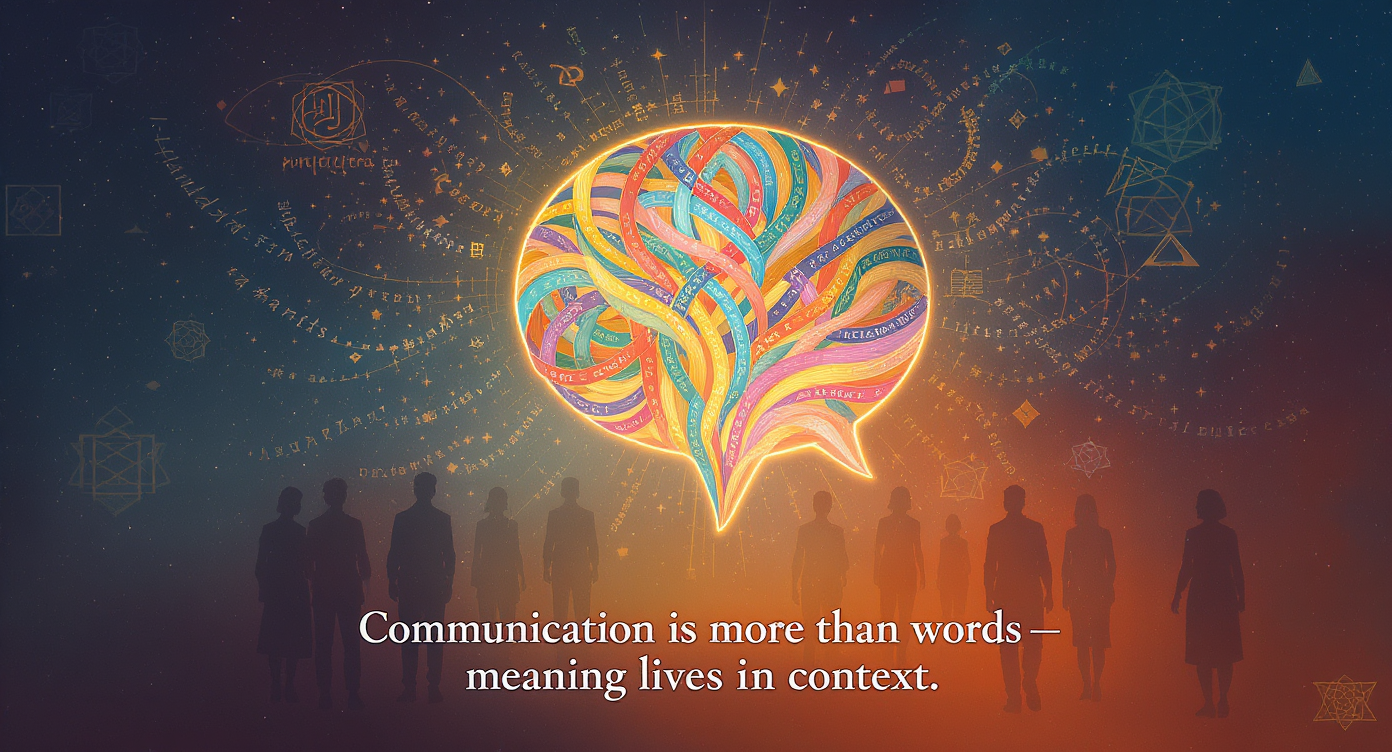
      The image corresponding with the following slogan: "Communication is more than words - meaning lives in context."


      In this course, we will explore how people communicate meaning across cultures, contexts, and social situations. Together, we will analyze real-life interactions, reflect on our own communication styles, and develop practical intercultural communication skills for academic, professional, and everyday contexts.

      This course is a space for curiosity, reflection, and practical communication growth. I encourage you to share your experiences, ask questions, and engage with perspectives different from your own.

      How to Be a Successful Student in This Course

      • Read weekly overview
      • Complete readings/videos
      • Participate in discussions
      • Submit activities before deadlines
      • Check feedback regularly
    • Intercultural Pragmatics & Communication

      Course Syllabus Overview


      Course Information
      Item Details
      Course Title Intercultural Pragmatics & Communication
      Delivery Mode Fully Online (Moodle LMS)
      Course Length 12 Weeks
      Recommended Workload 4–6 hours per week
      Target Audience Undergraduate students, adult learners, professionals, international students
      Prerequisites Intermediate English proficiency or equivalent communicative competence

      Course Description

      This course explores how meaning is shaped across cultures in real-life communication. Learners will examine how context, politeness, speech acts, indirectness, and cultural expectations influence interaction in academic, professional, digital, and everyday settings.

      Through practical examples, reflective activities, discussion forums, scenario-based tasks, and applied communication projects, learners will develop greater intercultural awareness, communicative adaptability, and confidence in diverse global interactions.


      Course Goals

      By the end of this course, learners will be able to:

      • Understand foundational concepts in intercultural pragmatics
      • Analyze how meaning changes across cultural and social contexts
      • Recognize differences in politeness, speech acts, and communication styles
      • Identify causes of intercultural misunderstandings
      • Apply communication strategies appropriately in diverse situations
      • Reflect critically on personal communication habits and assumptions
      • Demonstrate adaptability and intercultural communicative awareness

      Learning Outcomes
      Knowledge Outcomes

      Learners will be able to:

      • Define key concepts in pragmatics and intercultural communication
      • Explain how context shapes meaning
      • Describe major theories of politeness and intercultural interaction
      • Identify culturally influenced communication norms

      Skills Outcomes

      Learners will be able to:

      • Interpret implied meaning in communication
      • Analyze intercultural interaction scenarios
      • Adapt communication for diverse audiences
      • Resolve communication misunderstandings using pragmatic strategies
      • Participate effectively in intercultural discussions

      Reflective Outcomes

      Learners will be able to:

      • Evaluate personal communicative assumptions
      • Demonstrate empathy and perspective-taking
      • Reflect on cultural identity and communicative behavior
      • Develop intercultural communicative sensitivity

      Weekly Course Modules
      Section Main Theme
      Section 1 Introduction to Intercultural Pragmatics
      Section 2 Culture and Identity
      Section 3 Speech Acts and Politeness
      Section 4 Intercultural Misunderstanding and Adaptation
      Section 5 Communication in Academic, Professional & Digital Spaces
      Section 6 Showcase & Reflective Portfolio

      Learning Activities

      Throughout the course, learners will engage in:

      • Discussion forums
      • Scenario-based communication tasks
      • Reflective journals
      • Case study analyses
      • Interactive communication activities
      • Peer feedback and collaboration
      • Applied intercultural communication projects

      Assessment Overview
      Assessment Component Percentage
      Weekly Quizzes 15%
      Discussion Forum Participation 15%
      Reflective Journals 15%
      Applied Scenario Tasks 20%
      Midterm Pragmatic Analysis 15%
      Final Applied Project 20%

      Moodle Learning Tools

      This course uses several Moodle tools to support interactive learning:

      • Forums
      • Glossaries
      • Quizzes
      • Assignments
      • Databases
      • Workshops (peer review)
      • Journals
      • H5P interactive activities
      • Completion tracking and badges

      Participation Expectations

      Learners are expected to:

      • Participate respectfully in discussions
      • Engage thoughtfully with diverse perspectives
      • Complete weekly activities on time
      • Provide constructive peer feedback
      • Reflect critically and openly
      • Communicate professionally and ethically

      Technology Requirements

      Learners should have access to:

      • A stable internet connection
      • Moodle LMS
      • Video/audio playback capability
      • Word-processing software
      • Webcam and microphone (recommended)

      Accessibility & Inclusive Learning

      This course is designed to support diverse learners by providing:

      • Mobile-friendly materials
      • Captions and transcripts where possible
      • Flexible participation opportunities
      • Multimodal learning resources
      • Respectful and inclusive communication spaces

      Final Course Vision

      By the end of this course, learners should not only understand intercultural pragmatics theoretically but also demonstrate the ability to communicate more thoughtfully, flexibly, and effectively across cultures in authentic situations.

      The course ultimately aims to cultivate reflective communicators who can navigate linguistic and cultural diversity with awareness, empathy, professionalism, and confidence.

    • What Is This Course About?

      Communication is not only about words. Meaning is shaped by tone, context, relationships, assumptions, and cultural expectations. In intercultural communication, people may interpret the same message differently depending on their linguistic and cultural backgrounds.

      What Is Intercultural Pragmatics?

      Key points:

      • Pragmatics = meaning in context
      • Intercultural pragmatics = communication across cultural backgrounds
      • Focus on interpretation, politeness, indirectness, and social norms
      Example:

      Person A says:

      “It’s getting cold in here.”

      Possible meanings:

      • Observation
      • Request to close the window
      • Complaint
      • Invitation to act

      Takeaway:

      Different cultures may interpret indirect messages differently.


      Why Is This Important?

      In today’s interconnected world, people communicate across cultures more frequently than ever before — in universities, workplaces, online communities, and everyday social interactions. However, successful communication depends on more than knowing vocabulary or grammar. People from different cultural and linguistic backgrounds may interpret the same words, gestures, levels of directness, or expressions of politeness in very different ways.

      Intercultural misunderstandings can occur even when everyone speaks the same language fluently. For example, a comment intended as polite in one culture may sound too indirect, too informal, or even impolite in another. Similarly, silence, disagreement, humor, eye contact, or feedback may carry different meanings depending on cultural expectations and social context. Understanding these differences helps us communicate more effectively, avoid unnecessary conflict, and build stronger relationships across cultures.

      This course will help you develop greater awareness of how communication works in real-life contexts. Through practical examples, reflection, and interaction, you will learn how to interpret meaning more carefully, adapt your communication strategies, and engage more confidently and respectfully with people from diverse cultural backgrounds. These skills are increasingly valuable in academic study, international collaboration, professional environments, travel, and digital communication spaces.

      What Learners Will Do in This Course

      Learners will be invited to participate in:

      • Discussions
      • Case studies
      • Scenario analyses
      • Reflection journals
      • Applied communication tasks


      Learning Approach

      • Reflection over memorization
      • Respectful dialogue
      • Real-world examples
      • Cultural complexity (avoiding stereotypes)
    • This influential TED Talk by Nigerian writer Chimamanda Ngozi Adichie explores how stereotypes and limited cultural narratives shape the way people perceive others. Through personal stories and examples, the speaker demonstrates how assumptions about cultures and identities can affect communication, understanding, and relationships. This resource introduces learners to the importance of perspective-taking, intercultural awareness, and critical reflection — central themes throughout this course.

      While watching, consider:

      • How do stereotypes influence communication?
      • Why is it important to hear multiple perspectives?
      • Have you ever experienced being misunderstood because of assumptions about your background or identity?
    • Course Glossary

      Term Suggested Definition
      Pragmatics The study of meaning in context and how people interpret communication.
      Intercultural Communication Communication between people from different cultural backgrounds.
      Context The social, cultural, and situational environment influencing meaning.
      Inference A conclusion a listener or reader draws from communication.
      Speech Act An action performed through language, such as requesting or apologizing.
      Politeness Communication strategies used to maintain social relationships and respect.
      Communicative Competence The ability to communicate effectively and appropriately in context.
      Intercultural Competence The ability to interact effectively across cultures.
      Directness Communicating ideas explicitly and clearly.
      Indirectness Communicating ideas less explicitly or more implicitly.
      Cultural Norms Shared expectations and behaviors within a cultural group.
      Pragmatic Failure Misunderstanding caused by inappropriate language use across contexts or cultures.